
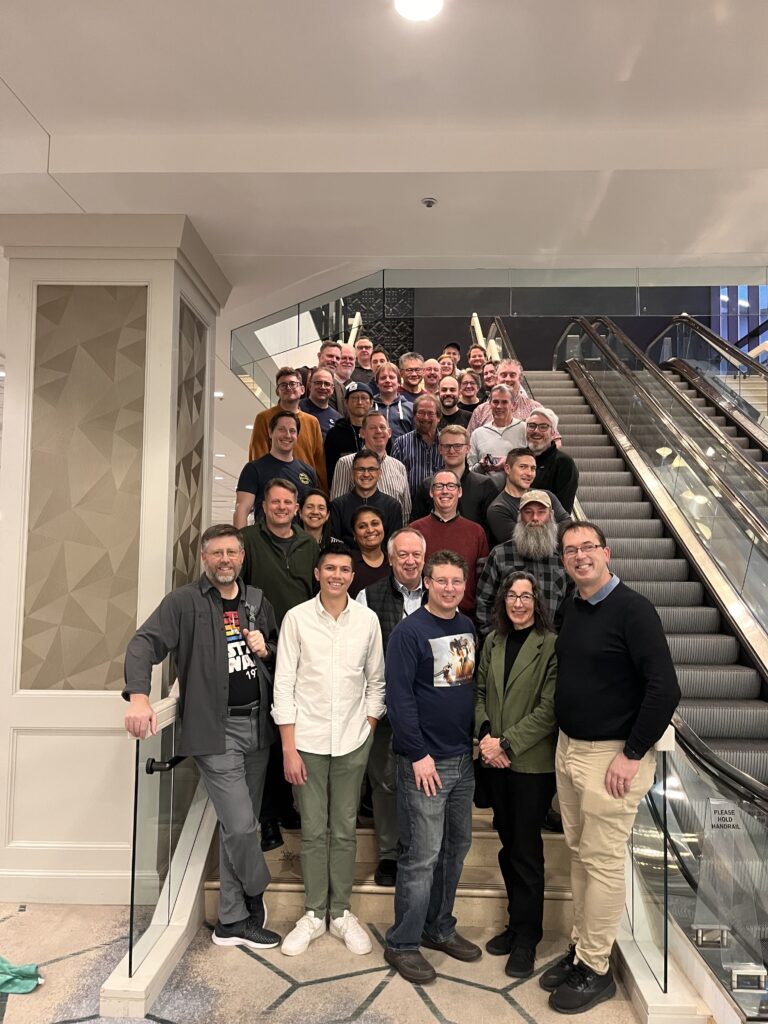
On December 7, 45 participants from the global research identity and infrastructure community met for FIM4R’s 21st workshop co-located with Internet2’s TechEX conference in Denver to discuss how identity, access management, and Research IT can better support modern research collaborations. Full notes are available as PDF: Notes FIM4R 21st Workshop Denver 2025 as well as the presentations via our agenda: https://indico.cern.ch/event/1590897/
Research IT Is Now Essential Infrastructure
Researchers increasingly depend on complex digital ecosystems, yet are still expected to build and manage them themselves. This has driven the rise of Research Computing & Data (RCD) professionals—experts who bridge science and technology. Discussions echoed findings from AARC: research communities need consultative support, not just tools, to get started effectively.
Campus IT Reality Check
A Nevada case study highlighted decades of technical debt in higher-education IT, where systems are optimised for enterprise support rather than research agility. Small teams, high staff turnover, and limited expertise often leave scientists building insecure or unsustainable solutions. The group emphasized the need for simplified, federated-first architectures, clear documentation, and self-service models that survive staffing changes.
Identity as a Service, Not a Barrier
There was strong consensus around Research IAM as a Service—hosted, federated identity solutions that reduce burden on institutions and speed up “time to science.” CILogon’s 15+ years of experience demonstrated how consistent access control, OIDC adoption, and managed group and token services can scale across hundreds of organizations.
Global Progress and Shared Lessons
Updates from AARC, EOSC, and AAF (Australia) showed growing alignment around common AAI patterns, policy toolkits, and hosted services. While the plumbing increasingly works, governance, assurance, and engagement with campus IT and external partners (notably Microsoft Entra ID) remain key challenges.
Looking Ahead
Participants identified future focus areas including professional career paths for Research IT staff, OpenID Federation adoption, better engagement between campus IT and research communities, and possibly a FIM4R v3 paper reflecting today’s complex virtual research environments.
Bottom line: research infrastructures are now too complex to leave to chance. Hosted, federated, and sustainable AAI solutions, designed around researcher needs, are critical to accelerating research.